What Is the Psalter?
By The Quiethaven Editorial Team · · Updated
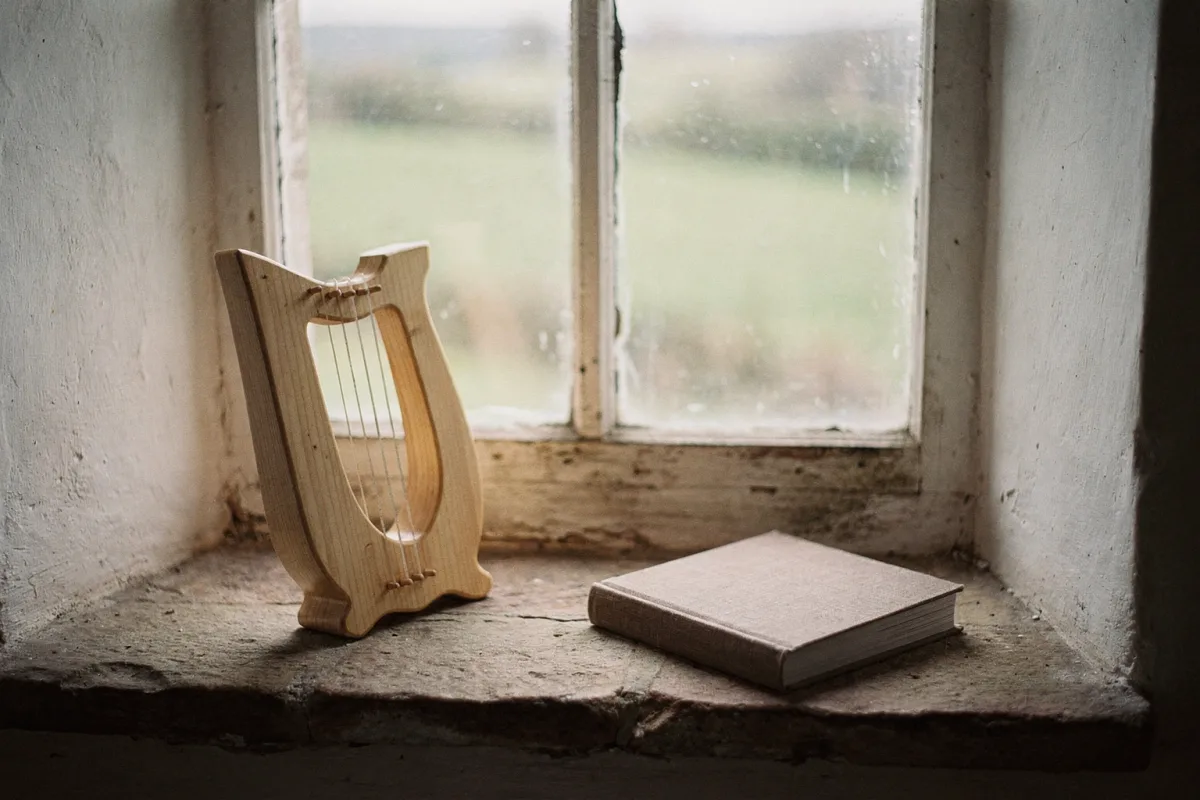
The Psalter is the Book of Psalms: the 150 prayers and songs at the center of the Bible, or a separate volume that holds them for prayer and worship. The name comes from the Greek psalterion, a stringed instrument, because the psalms were first sung to music. Israel prayed the Psalter in the Temple, Jesus prayed it, and churches have prayed it ever since.
Below is what the word means, what is inside the Psalter, how it is arranged, and how Christians have used it.
What does "Psalter" mean?
The word has two common uses.
- The Book of Psalms itself. When a church says "we pray the Psalter," it means the 150 psalms as a whole.
- A book of psalms for worship. A printed Psalter is a separate volume, often laid out for daily reading or set to music for singing. The Book of Common Prayer contains its own Psalter, and Reformed churches have long sung from metrical Psalters, where the psalms are put into rhyme and regular meter.
The Hebrew title of the book is Tehillim, which means "praises."
What is inside the Psalter?
The Book of Psalms has 150 psalms and, in the KJV, 2,461 verses. The shortest is Psalm 117, two verses long. The longest is Psalm 119, with 176 verses arranged in 22 sections of eight, one for each letter of the Hebrew alphabet, which the KJV prints as headings such as ALEPH and BETH.
The psalms speak in every voice a person uses with God. The main kinds are:
- Hymns of praise, such as Psalm 103 and Psalm 150.
- Laments, prayers of complaint and grief, such as Psalm 13 and Psalm 88. They are among the most common psalms in the book.
- Songs of thanksgiving for help already received, such as Psalm 30.
- Psalms of trust, such as Psalm 23 and Psalm 121.
- Psalms of repentance, such as Psalm 51.
- Songs of Degrees, Psalms 120 to 134, fifteen short songs traditionally sung by pilgrims going up to Jerusalem.
The book ends in pure praise: "Let every thing that hath breath praise the LORD. Praise ye the LORD" (Psalm 150:6).
The five books of the Psalter
The Psalter is divided into five books, often compared to the five books of Moses:
- Psalms 1 to 41
- Psalms 42 to 72
- Psalms 73 to 89
- Psalms 90 to 106
- Psalms 107 to 150
Each of the first four books ends with a short blessing, a doxology. Book One closes: "Blessed be the LORD God of Israel from everlasting, and to everlasting. Amen, and Amen" (Psalm 41:13). Book Two adds an editor's note after its blessing: "The prayers of David the son of Jesse are ended" (Psalm 72:20). Psalm 150 serves as the closing doxology of the whole Psalter.
Who wrote the Psalms?
Many people. In the KJV, 73 psalms carry David's name in their titles. Others are credited to Asaph, the sons of Korah, Solomon, Heman, Ethan and Moses, whose Psalm 90 is probably the oldest in the book. Many have no named author. The collection grew over centuries and was edited into its final shape after the exile. Our guide to who wrote the Bible covers the wider picture.
Why are psalm numbers different in some Bibles?
Older Catholic Bibles such as the Douay-Rheims follow the Greek and Latin numbering, which joins and splits a few psalms differently. From Psalm 10 to Psalm 147 their number is usually one lower than in Protestant Bibles, so the Shepherd Psalm is Psalm 22 in the Douay-Rheims and Psalm 23 in the KJV. Most modern Catholic translations use the Hebrew numbering and give the other number in brackets.
How Christians have prayed the Psalter
Jesus prayed the Psalms. From the cross he cried the opening of Psalm 22, "My God, my God, why hast thou forsaken me?" (Matthew 27:46), and he died with the words of Psalm 31:5 on his lips (Luke 23:46). After the Last Supper the disciples "sung an hymn" (Matthew 26:30), traditionally understood as the Passover psalms.
The early church sang them. Paul told the Colossians to teach one another "in psalms and hymns and spiritual songs" (Colossians 3:16).
Monasteries prayed all 150 every week. The Rule of St. Benedict, written in the sixth century, spreads the whole Psalter across a week of daily prayer. Today the Catholic Liturgy of the Hours prays it over four weeks.
The Prayer Book made it monthly. Thomas Cranmer's Book of Common Prayer of 1549 divided the Psalter into morning and evening portions over thirty days, so ordinary people could pray it through each month. Anglicans still use that pattern.
Reformed churches sang it. Calvin's Geneva produced a complete metrical Psalter in 1562, and the Bay Psalm Book of 1640 was the first book printed in British North America. Luther called the Psalter a little Bible, because it gathers the whole of Scripture into prayer.
How to start praying the Psalter
The simplest way is one psalm a day, in order, which takes five months. A fuller way is the thirty-day pattern of the Prayer Book. Our guide on how to read the Psalms lays out these and other practical ways to begin, including what to do with the angry and sorrowful psalms.
Common questions
Is the Psalter the same as the Book of Psalms?
Yes. "Psalter" is the traditional name for the Book of Psalms, and also for a printed book that holds the psalms for worship.
How many psalms are in the Psalter?
150 in Protestant and Catholic Bibles. Some Greek Bibles add a short Psalm 151 about David and Goliath, which Protestant and Catholic Bibles do not include.
What is a metrical Psalter?
A Psalter in which each psalm is rewritten in rhyme and regular meter so a congregation can sing it to a hymn tune. "The Lord's my shepherd, I'll not want," from the Scottish Psalter of 1650, is a well-known example.
What is the thirty-day Psalter?
The Book of Common Prayer's plan for reading all 150 psalms in a month, with a morning and an evening portion for each day. In a 31-day month the last day repeats the portion of the day before.
Why is Psalms in the middle of the Bible?
English Bibles group the Old Testament by type, and Psalms belongs with the poetry and wisdom books between Job and Proverbs. Our list of the books of the Bible in order shows where it sits.
The Psalter in Quiethaven
If you choose a Protestant tradition, the Pray tab in Quiethaven has a Psalms in 30 days card that follows the thirty-day Psalter of the 1928 Book of Common Prayer. It opens the morning portion for today's date during the day and the evening portion from 6 p.m., and the same psalms appear in the app's morning and evening prayer. You can find it, with the rest of the prayers, in the Quiethaven prayer app.
About the author
The Quiethaven Editorial Team — The Quiethaven editorial team writes about Bible reading, prayer and the Christian year, with theological review across the Protestant and Catholic traditions the app serves.
Make it a daily habit with Quiethaven on iPhone.
Download on theApp StoreFree to download. Sign in with Apple or Google; a Quiethaven Premium subscription is required.
Keep reading
- How to Pray When You Don't Know What to Say: 8 Ways
- Bible Reading Plans for Beginners: 6 Plans You Can Finish
- What Is Lectio Divina? How to Pray with Scripture
- Pastoral Counseling vs Confession: What's the Difference?
- What Is Lent? Meaning, 2027 Dates and How to Keep It
Explore Quiethaven
- Bible App
- Prayer App
- Prayer Timer
- Pray Together
- Prayer Requests
- Talk to a Pastor
- Verse of the Day
- Bible Translations
- Liturgical Calendar
- Catholic Bible App
- Gratitude Journal
- Quiethaven vs YouVersion
- Quiethaven vs Hallow
- Quiethaven vs other Bible apps
- Every book of the Bible
- Verses explained
- Christian prayers
- Lives of the saints
- About Quiethaven