What Is Lectio Divina?
By The Quiethaven Editorial Team · · Updated
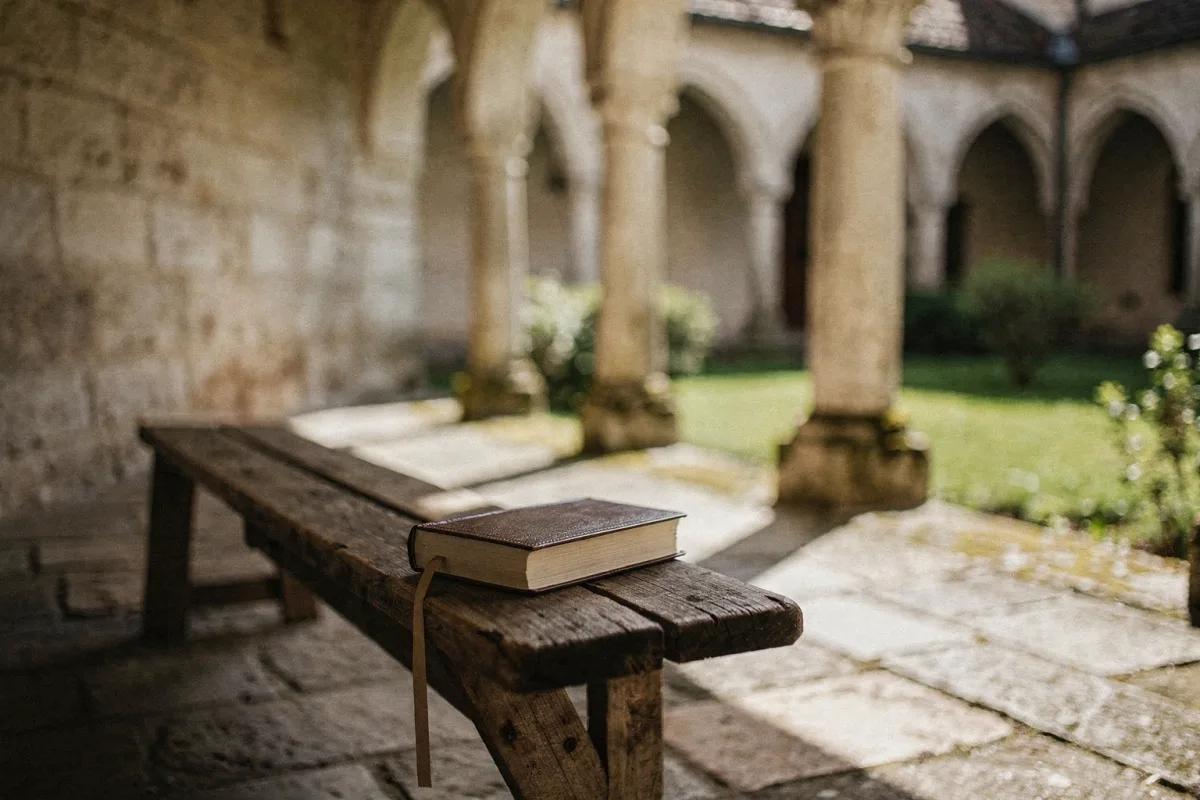
Lectio Divina, Latin for "divine reading," is a slow way of reading the Bible as prayer. You take a short passage, read it several times, notice the word or phrase that speaks to you, answer God in prayer, and then rest quietly in his presence. The four steps are traditionally called lectio (read), meditatio (reflect), oratio (respond) and contemplatio (rest).
Where Lectio Divina comes from
Praying over Scripture is older than the name. The psalmist's delight is in the law of the LORD, "and in his law doth he meditate day and night" (Psalm 1:2). Early Christian teachers read the Bible slowly and prayerfully, and in the sixth century the Rule of St. Benedict set aside fixed hours every day for monks to give to sacred reading.
In the twelfth century a Carthusian monk, Guigo II, described the practice as a ladder with four rungs: reading, meditation, prayer and contemplation. Those four names are the ones still used.
The practice is best known among Catholics. In 2010 Pope Benedict XVI set out its steps in Verbum Domini and added a fifth, action, in which the reading moves a person to love others (Verbum Domini 87). Protestants practice it too. Martin Luther in 1539 described his own way of reading Scripture in three words, prayer, meditation and trial (oratio, meditatio, tentatio), and many Protestant churches teach Lectio Divina today.
Reading the Bible versus praying it
Bible study asks what a passage meant to its first readers and what it teaches. Lectio Divina takes that seriously, then asks a further question: what is God saying to me in these words today? You read less and listen more. A chapter might take a week, and a single verse might fill twenty minutes.
Both belong in a Christian life. Study builds understanding, and prayerful reading lets the same words shape the heart. Our guide to Bible study methods covers the study side, including where Lectio Divina fits among them.
How to practice Lectio Divina: the four steps
Before you begin, choose a short passage of four to eight verses, sit somewhere quiet and ask God to speak, perhaps in Samuel's words: "Speak; for thy servant heareth" (1 Samuel 3:10).
- Lectio: read. Read the passage slowly, aloud if you can. Then read it a second time. Notice which word or phrase stays with you. You do not need to pick the most important one; notice the one that stays.
- Meditatio: reflect. Repeat that word or phrase to yourself and turn it over, the way Mary "kept all these things, and pondered them in her heart" (Luke 2:19). Why did it catch you? What does it touch in your life right now?
- Oratio: respond. Speak to God about what you noticed. Thank him, confess, ask, or tell him plainly how the words made you feel. Your prayer grows out of the text.
- Contemplatio: rest. Stop talking and be still in God's presence for a few minutes. No new thoughts are required. If your mind wanders, return gently to the word you were given.
Many people end with one small action for the day that the passage asks of them, the step Benedict XVI called actio.
An example with Psalm 23
Take the opening of Psalm 23: "The LORD is my shepherd; I shall not want. He maketh me to lie down in green pastures: he leadeth me beside the still waters. He restoreth my soul..." Read it twice, slowly.
Suppose "he maketh me to lie down" stays with you. As you reflect, you notice that the shepherd makes the sheep lie down: rest is something given, and you have been refusing it for weeks. In prayer you tell God you are tired and ask him to show you where to stop. Then you sit in silence for three minutes with the picture of still water. That is a whole Lectio Divina, in about fifteen minutes.
Good passages to start with
- Psalm 23, Psalm 46 or Psalm 121
- Matthew 11:28-30: "Come unto me, all ye that labour and are heavy laden, and I will give you rest"
- Matthew 5:3-12, the Beatitudes
- John 15:1-11, the vine and the branches
- Philippians 4:4-9
- The Gospel your church will read next Sunday, prayed the evening before
Common questions
How long does Lectio Divina take?
Fifteen to twenty minutes is typical, and ten is enough to begin. If you are unsure how much time to give prayer at all, see our guide on how long you should pray.
Is Lectio Divina Catholic?
It grew up in Catholic monasteries and the Catholic Church recommends it, but it is slow, prayerful reading of Scripture, and many Protestants practice it as well.
Is Lectio Divina biblical?
The name came later, but meditating on God's word runs all through Scripture: "thou shalt meditate therein day and night" (Joshua 1:8).
Is Lectio Divina the same as meditation?
It is meditation in the Christian sense: filling the mind with a passage of Scripture and answering God in prayer. It does not try to empty the mind.
Can you do Lectio Divina in a group?
Yes. One person reads the passage aloud two or three times with silence in between, each person may share the word that stood out, and then the group prays. Keep the sharing short and leave debates about interpretation for another time.
What if nothing stands out?
Read again more slowly, or stay with the first phrase. Some days the reading is quiet, and resting in God's presence is still prayer.
Lectio Divina in the Quiethaven app
If you choose the Catholic tradition in the Quiethaven app for iPhone, you will find Lectio Divina: Matthew, a 28-day reading plan that takes the Gospel of Matthew one chapter a day. In either tradition, the Bible reader lets you highlight the phrase that stays with you and write a short note beside it, and the prayer timer keeps the time for the silence at the end, so you can stop watching the clock.
About the author
The Quiethaven Editorial Team — The Quiethaven editorial team writes about Bible reading, prayer and the Christian year, with theological review across the Protestant and Catholic traditions the app serves.
Make it a daily habit with Quiethaven on iPhone.
Download on theApp StoreFree to download. Sign in with Apple or Google; a Quiethaven Premium subscription is required.
Keep reading
- Pastoral Counseling vs Confession: What's the Difference?
- What Is Lent? Meaning, 2027 Dates and How to Keep It
- How to Read the Psalms: A Simple Guide for Beginners
- What Is Pentecost? Meaning, 2027 Date and How It's Kept
- Bible Study Methods: 6 Simple Ways to Study Scripture
Explore Quiethaven
- Bible App
- Prayer App
- Prayer Timer
- Pray Together
- Prayer Requests
- Talk to a Pastor
- Verse of the Day
- Bible Translations
- Liturgical Calendar
- Catholic Bible App
- Gratitude Journal
- Quiethaven vs YouVersion
- Quiethaven vs Hallow
- Quiethaven vs other Bible apps
- Every book of the Bible
- Verses explained
- Christian prayers
- Lives of the saints
- About Quiethaven