How to Fast as a Christian
By The Quiethaven Editorial Team · · Updated
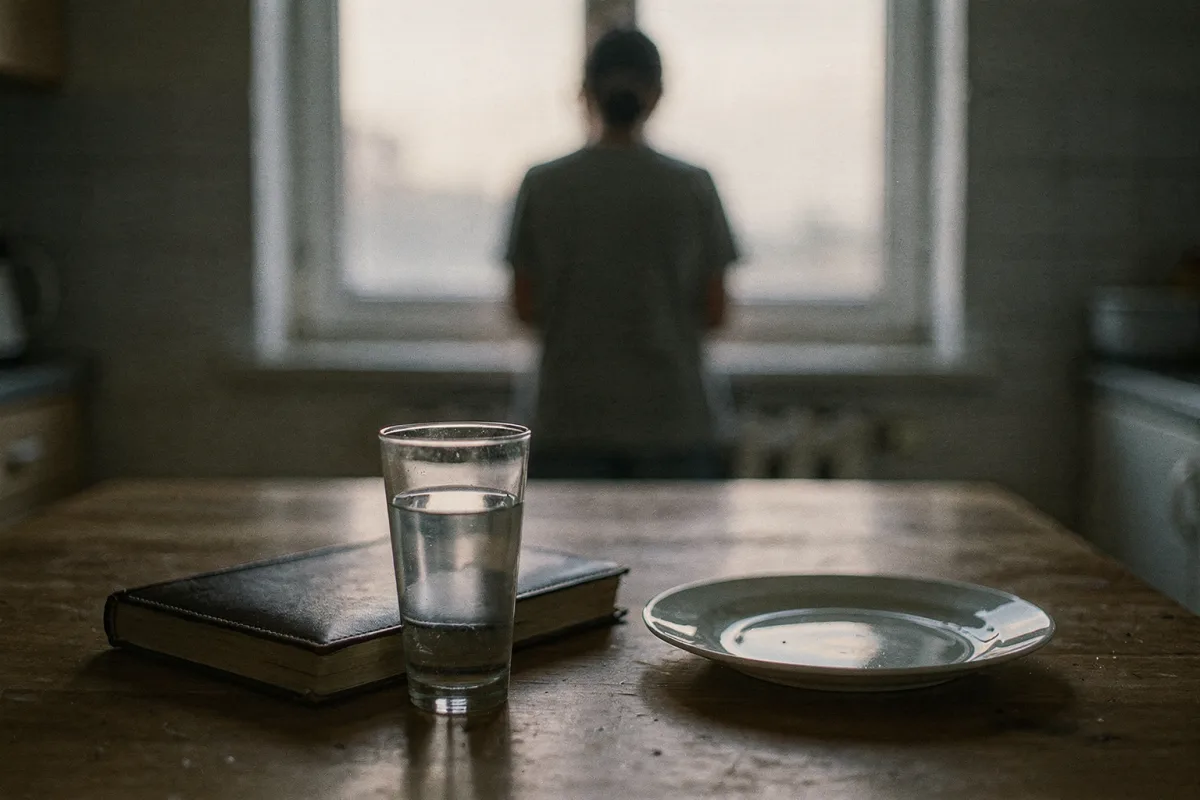
To fast as a Christian, you go without food, or something else you rely on, for a set time and give that time to prayer. Most people begin by skipping one meal and praying through it. If you have a health condition, are pregnant or take regular medication, talk to your doctor before you fast from food.
This guide covers why Christians fast, the kinds of fasting in the Bible, the rules Catholics keep, how to start, and who should not fast from food at all.
Why Christians fast
Jesus expected his followers to fast. In the Sermon on the Mount he did not say "if ye fast" but "when ye fast" (Matthew 6:16). Asked why his disciples did not fast while he was with them, he answered that the days would come "when the bridegroom shall be taken from them, and then shall they fast" (Matthew 9:15).
In Scripture people fast for a handful of reasons:
- To turn back to God. Fasting often goes with repentance: "turn ye even to me with all your heart, and with fasting, and with weeping, and with mourning" (Joel 2:12).
- To seek guidance. The church in Antioch fasted and prayed before sending out Barnabas and Saul (Acts 13:2-3), and Ezra fasted to "seek of him a right way for us" (Ezra 8:21).
- To grieve and to pray for others. Nehemiah "wept, and mourned certain days, and fasted, and prayed before the God of heaven" (Nehemiah 1:4).
- To make room for prayer. Hunger becomes a reminder, many times a day, to turn to God. "Man shall not live by bread alone, but by every word that proceedeth out of the mouth of God" (Matthew 4:4).
Fasting is not a way to earn God's favor or force an answer to prayer. Isaiah warns against an empty fast and names the one God chooses: "to loose the bands of wickedness... to deal thy bread to the hungry" (Isaiah 58:6-7). That is why fasting has always gone with prayer and giving to the poor.
Kinds of fasting in the Bible
- A regular fast: no food for a set time, with water. Jesus fasted forty days in the wilderness and "was afterward an hungred" (Matthew 4:2). No one is asked to copy its length.
- A partial fast: giving up certain foods. Daniel "ate no pleasant bread, neither came flesh nor wine in my mouth" for three weeks (Daniel 10:3). With Daniel 1, this is behind what many churches call a Daniel fast.
- A total fast: no food and no water. Esther asked her people to "neither eat nor drink three days" (Esther 4:16) at a moment of mortal danger. Going without water is dangerous, and Christians do not do it as an ordinary practice.
- A shared fast: a whole community fasting together, as Nineveh did when it repented (Jonah 3:5).
Many Christians also fast from things other than food: social media, television, alcohol, sweets or shopping. The Bible's examples are about food, but the aim carries over: give up something real and fill the space with prayer.
Catholic fasting rules
The Catholic Church sets two days of fasting and abstinence, Ash Wednesday and Good Friday, and makes every Friday a day of penance (canons 1250-1252). In 2027 Ash Wednesday falls on February 10 and Good Friday on March 26.
- Fasting binds Catholics aged 18 to 59. In the United States the bishops describe a fast day as one full meal and two smaller meals that together do not equal a full meal, with nothing between meals.
- Abstinence from meat binds Catholics from age 14 on Ash Wednesday, Good Friday and the Fridays of Lent.
- Other Fridays are days of penance. US Catholics may keep them by abstaining from meat or by another act of penance or charity.
- Before Communion Catholics fast for one hour from food and drink, except water and medicine.
The sick, pregnant women and others with a serious reason are excused. Ask your parish if you are unsure how the rules apply to you.
How Protestants fast
Protestant churches set no binding fast days, but many Christians fast by choice, often during Lent or before a big decision. The Reformers kept the practice. John Calvin wrote that fasting helps restrain the flesh, prepares the heart for prayer and expresses humility before God. John Wesley preached on fasting from the Sermon on the Mount and kept regular fast days himself. Many churches today hold a week or more of prayer and fasting at the start of the year.
How to start fasting: step by step
- Check your health first. Read the section below on who should not fast. If any of it applies to you, talk to your doctor before you fast from food.
- Know why you are fasting. Write down one purpose: repentance, a decision, someone you are praying for, or simply to draw near to God.
- Start small. Skip one meal, or give up one food or one habit for a day. Do not begin with a long fast.
- Plan the prayer. Decide what you will do in the time you would have spent eating. Read a psalm, pray the Lord's Prayer slowly, or pray for the person on your heart. Our guide on how long to pray has a simple ten-minute pattern.
- Drink water. Unless a doctor has told you otherwise, keep drinking water throughout.
- Keep it quiet. Jesus said to "anoint thine head, and wash thy face; That thou appear not unto men to fast" (Matthew 6:17-18). Tell only those who need to know, such as your family.
- Break the fast gently. Eat a light, ordinary meal and give thanks.
- Stop if you feel unwell. Dizziness, faintness or confusion are signs to eat. Ending a fast early is not a spiritual failure.
Who should not fast from food
Fasting from food is not safe for everyone. Do not fast from food without your doctor's advice if you:
- are pregnant or breastfeeding;
- have diabetes or problems with blood sugar;
- have or have had an eating disorder;
- take medicine that must be taken with food;
- have heart, kidney or another chronic illness, or are frail or elderly;
- are under 18 or still growing;
- do heavy physical work or will be driving or operating machinery.
If you cannot fast from food, you have not missed out. Fast from something else, give the money you would have spent to the poor, or set aside extra time for prayer. The Catholic rules themselves excuse the sick, and no church asks anyone to harm their health.
Common questions
Can I drink water while fasting?
Yes. Almost every Christian fast allows water, and you should keep drinking it.
Can I drink coffee while fasting?
Churches leave this to you. Some keep black coffee or tea; others give it up as part of the fast. If you drink coffee daily, stopping suddenly can bring headaches, so you may prefer to keep it.
How long should a Christian fast?
Scripture sets no required length. For most people a single meal or one day is a good place to start. Longer fasts need medical advice.
Is it OK to tell people you are fasting?
Jesus warned against fasting to be seen (Matthew 6:16-18). Telling your family so they understand why you are skipping dinner is fine. Announcing it to be admired is what he meant.
What is a Daniel fast?
A partial fast based on Daniel 1 and 10: usually vegetables, fruit, grains and water, without meat, sweets or wine, often for 21 days. It is a modern practice drawn from Daniel's example, not a command.
Keep a fast with the Quiethaven app
The liturgical calendar in the Quiethaven app marks Ash Wednesday and Good Friday as days of fasting and abstinence for Catholics, and every day of Lent, for Catholics and Protestants alike, has an "I fasted today" check with a running count. The reading plans Lent: Passion of Christ (Catholic) and Lent with the Prayer Book (Protestant) give each day of Lent a passage. For the meal you skip, the prayer timer, part of Premium, keeps the time so you can pray without watching the clock.
About the author
The Quiethaven Editorial Team — The Quiethaven editorial team writes about Bible reading, prayer and the Christian year, with theological review across the Protestant and Catholic traditions the app serves.
Make it a daily habit with Quiethaven on iPhone.
Download on theApp StoreFree to download. Sign in with Apple or Google; a Quiethaven Premium subscription is required.
Keep reading
- How to Memorize Bible Verses: 7 Methods That Work
- What Is Advent? Meaning, 2026 Dates and How to Keep It
- What Is the Gospel? The Good News of Jesus Explained
- How to Know God’s Will for Your Life: A Practical Guide
- Who Wrote the Bible? The Authors and How We Know
Explore Quiethaven
- Bible App
- Prayer App
- Prayer Timer
- Pray Together
- Prayer Requests
- Talk to a Pastor
- Verse of the Day
- Bible Translations
- Liturgical Calendar
- Catholic Bible App
- Gratitude Journal
- Quiethaven vs YouVersion
- Quiethaven vs Hallow
- Quiethaven vs other Bible apps
- Every book of the Bible
- Verses explained
- Christian prayers
- Lives of the saints
- About Quiethaven